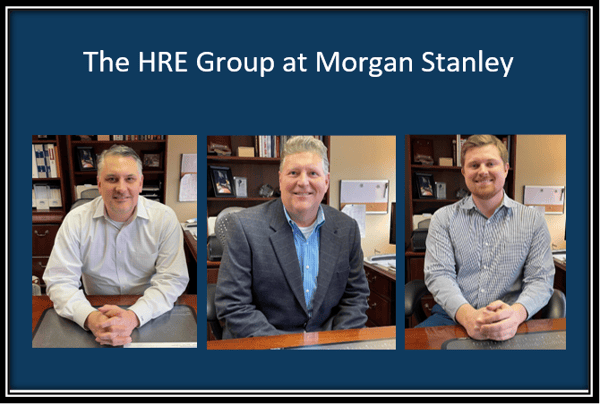









Christopher Rapier
Senior Vice President, Wealth Management, Financial Advisor, Senior Investment Management Consultant, Portfolio Management Director
Phone:
(217) 351-3627(217) 351-3627


Taxes can quietly reduce what your portfolio keeps over time. Our tax-aware approach is designed to help align your investment strategy with your broader plan, using disciplined portfolio construction and ongoing monitoring. When appropriate, we incorporate tools such as direct indexing and UMAs to help manage tax impact over time.
Tax-aware investing focuses on how portfolio decisions—rebalancing, security selection, and implementation—can affect what you keep after taxes. Rather than treating taxes as an afterthought, we incorporate tax considerations into the ongoing management process where appropriate, while keeping your long-term goals, risk tolerance, and liquidity needs at the center of the strategy.
Direct indexing is an approach that seeks to deliver broad market exposure by holding individual securities rather than a single pooled vehicle. This structure may create flexibility to personalize constraints (such as exclusions) and to manage realized gains and losses over time. We evaluate whether direct indexing fits your situation based on factors such as account type, time horizon, concentration, and the complexity you're comfortable with.
A unified managed account (UMA) can help bring multiple strategies—such as separately managed accounts, ETFs, and other allocations—into a coordinated framework. This can support a more integrated view of portfolio exposures, rebalancing decisions, and ongoing monitoring. When appropriate, a UMA structure may also help implement tax-aware decisions more consistently across the portfolio.
Our process begins with understanding your goals and the role your taxable accounts play in your broader plan. From there, we focus on disciplined implementation, ongoing monitoring, and periodic reviews—so your strategy can evolve as markets change and your life changes. The objective is to help you make informed decisions with a portfolio that is designed to be both intentional and tax-aware over time.
With the guidance of a Morgan Stanley Financial Advisor and the strength of a five-time award-winning wealth management platform<sup> <a href="#wm-disclosure-1" class="Link--underline"> <span class="sr-only">Footnote</span> 1 </a> </sup>, you can build, preserve, and manage your wealth with precision and purpose. For every stage of your financial journey.
Christopher Rapier
Dillon Hoel
Courtney Goembel