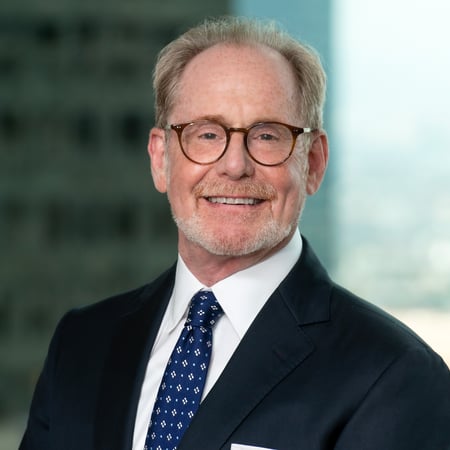
Dwight Guinto
Private Banker


Before working with private clients at Morgan Stanley, I worked in the institutional investment world as a hedge fund portfolio manager specializing in long/short equity, derivatives, volatility and complex portfolio structures.
That experience shaped how I think about risk, liquidity and portfolio construction – specifically how portfolios behave under stress, not just in favorable markets.
Over time, it became clear that many individual investors don't struggle from a lack of opportunity, but rather from being forced to make decisions at the wrong time – when the structure of their wealth makes it difficult to raise cash, rebalance, or wait when market conditions deteriorate.
I designed my practice around addressing those constraints:
Moving Beyond the Traditional 60/40 Framework
Rather than relying on a single allocation framework, I think in terms of capital roles. Portfolios are structured so capital is intentionally assigned to [1] Liquidity, [2] Stability, [3] Public Growth, and where appropriate, [4] Private Growth – reducing the likelihood that volatility dictates timing or behavior.
Turning Paper Wealth into Practical Flexibility
This approach is especially relevant for clients with concentrated or illiquid assets, where wealth may exist on paper but flexibility is limited in practice. In these situations, the work is less about maximizing returns and more about improving how and when wealth can be accessed without introducing unnecessary friction.
International Wealth Planning
I also work with international families navigating the transition into the U.S. financial system, where differences in structure, taxation and access can create unintended constraints if left unaddressed.
On a personal note, I was born in Australia, grew up in Hong Kong, and came to the U.S. for college – where I've since made my home.
Outside of work, I'm drawn to disciplines centered on craftsmanship and endurance: fine fabrics, leather, traditional techniques such as Urushi lacquer and mechanical watchmaking. These are crafts that reward patience, precision and respect for process – values that also shape how I think about long-term capital stewardship.
Bachelor of Science (Honors), magna cum laude
Biochemistry and Molecular Biology
Scholarships & Fellowships:
- Davis UWC Scholarship
- Brown Scholarship
Master of Science
Chemistry
Scholarships & Fellowships:
- Croucher Fellowship
- Merck Fellowship
- George Buchi Fellowship
- Henry Sinclair Fellowship
A curated collection of materials illustrating how the frameworks outlined in My Story and Services are applied in practice.
Concentrated Stock
Securities Based Lending
1031 Exchange
Opportunity Zone
Private Shares Liquidity
Pre-IPO/M&A
Gold
Alternatives
Co-Investments
Options
Structured Investments
529 Plans
Dwight Guinto
Peter Barash